
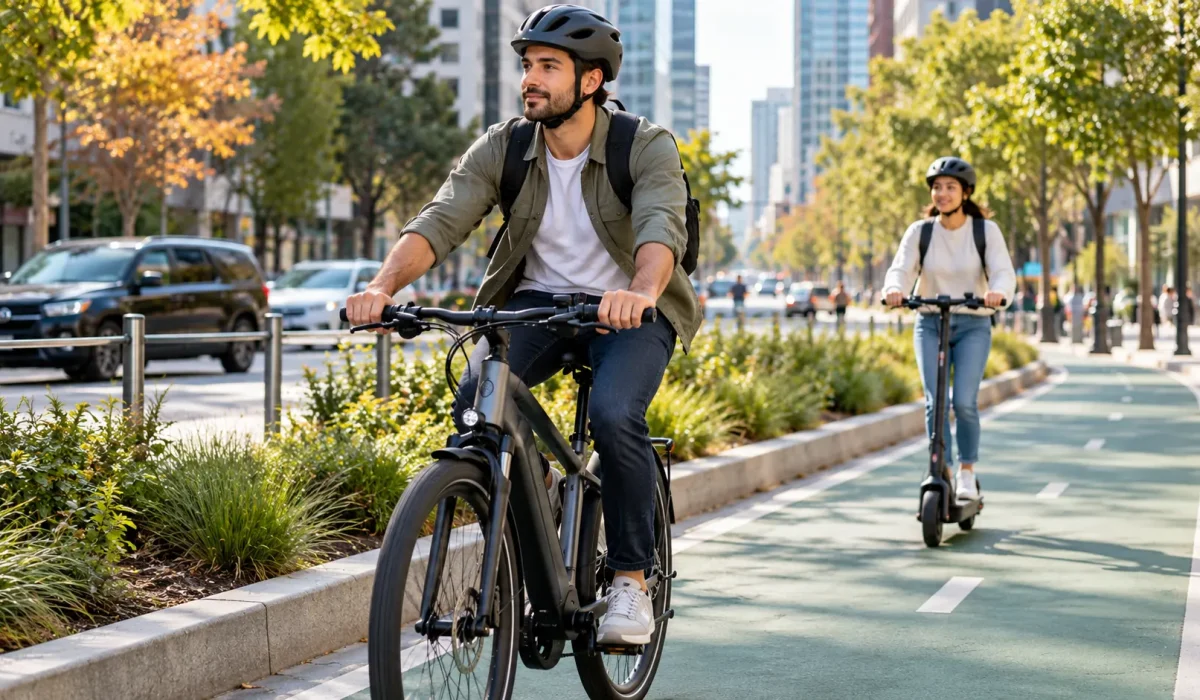
Electric bicycles and stand-up electric scooters are changing short-distance travel. People use them to reach work, explore neighborhoods, and avoid traffic. Their convenience, however, comes with injury risks. A sudden pothole, opening car door, sharp turn, or hard landing can cause injuries ranging from scraped skin to serious head or spine trauma.
New research makes e-bike and e-scooter injuries an important safety topic in 2026. A 2026 study available through the CDC found that estimated annual U.S. emergency department visits involving e-scooters increased 306% from 2020 to 2024. Visits involving e-bikes increased 389% during that period. These figures describe estimated injury visits, not the risk of injury per ride.
Why Are E-Bike and E-Scooter Injuries Increasing?
More people are riding motor-assisted devices in places built primarily for cars or pedestrians. Some riders are new to two-wheeled travel. Others underestimate how quickly an electric motor can accelerate or how much distance they need to stop.
E-scooters have small wheels and a standing riding position. Their wheels can react abruptly to cracks, loose gravel, and uneven pavement. E-bikes are generally heavier than conventional bicycles and may travel at higher speeds. Speed, road conditions, rider experience, and traffic exposure all affect crash severity.
The U.S. Consumer Product Safety Commission’s April 2026 report estimated approximately 698,500 emergency department visits related to micromobility products between 2017 and 2024. That total includes e-bikes, e-scooters, and self-balancing devices.
What Injuries Are Most Common?
Head Injuries and Concussions
Riders can strike their heads after falling over handlebars or colliding with another vehicle. Symptoms may include headache, dizziness, nausea, confusion, or sensitivity to light. Symptoms sometimes appear hours after the crash, even if the person initially feels fine.
A helmet helps protect the head, but it does not make concussions impossible. Readers can explore our existing guide to concussions and their long-term effects for more background.
Wrist, Arm, and Shoulder Injuries
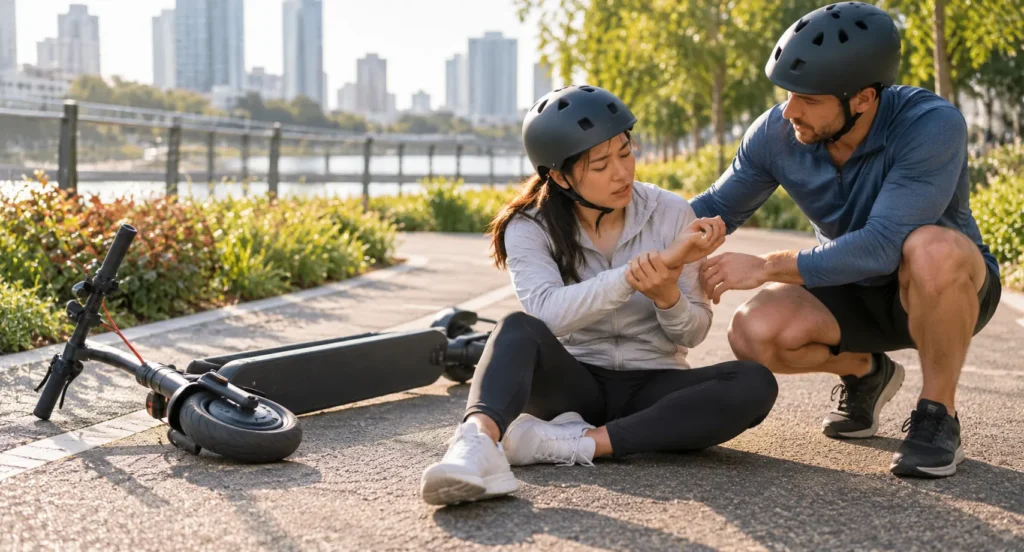
People often instinctively extend their hands to break a fall. That movement can injure the wrist, forearm, elbow, or shoulder. Fractures, dislocations, and ligament sprains may cause swelling, tenderness, deformity, or difficulty using the arm. A seemingly minor wrist injury may still require an X-ray.
Knee, Ankle, and Leg Injuries
Twisting while stepping off a scooter, falling sideways, or being struck by a vehicle can injure the lower body. Knee sprains, ankle fractures, bruises, and abrasions may make walking painful. Do not assume a painful joint is only a strain when weight-bearing is difficult.
Neck and Spinal Injuries
A collision can place sudden force on the neck and back. In an October 2026 study of spinal injuries associated with electric micromobility devices, researchers found that spinal injury counts increased substantially across the study period. A suspected spinal injury requires urgent medical assessment, not stretching, massage, or spinal manipulation.
Why Children and Teenagers Need Special Attention
E-bikes and scooters appeal to younger riders, but experience, speed judgment, helmet habits, and vehicle size matter. In October 2026, research presented at the American Academy of Pediatrics national conference described nearly four times as many pediatric e-bike and e-scooter injuries at one California hospital in 2025 as in 2019. The findings came from one hospital and should not be treated as a national rate.
The conference research summary also reported more severe injury patterns among the e-bike patients in that sample. Families should check local age requirements, speed limits, helmet rules, and whether a device suits a young rider’s skills.
How to Reduce Crash Risks Before Riding
Many preventable crashes begin before a trip. Use a short pre-ride check rather than assuming a device is safe because it worked yesterday.
- Fit a helmet: Choose an appropriate certified helmet and adjust it so it sits level and secure.
- Check brakes and tires: Look for damage, low pressure, or poor braking response.
- Use lights: A white front light, red rear light, and reflective clothing help drivers see you.
- Secure belongings: Use a backpack or rack. Keep both hands available for control.
- Pick safer routes: Prefer protected lanes and lower-speed streets where permitted.
- Follow local rules: Riding locations, device classifications, and helmet requirements vary.
The National Highway Traffic Safety Administration’s bicycle safety guidance offers practical advice about visibility, helmets, road hazards, and predictable riding. Check manufacturer instructions for device-specific handling advice.
Watch for Intersections, Doors, and Road Hazards
Intersections bring multiple movements together. A driver may turn across a bike lane, enter a driveway, or open a car door without noticing an approaching rider. Large trucks and buses have wide blind spots. Scooters can also lose stability when crossing potholes or uneven pavement.
Slow down before crossings, look for turning vehicles, and avoid riding alongside large vehicles during turns. Stay alert rather than relying on a bell or headlight to make drivers notice you. The Federal Motor Carrier Safety Administration’s road-sharing tips explain blind spots and safe positioning near trucks and buses.
What Should You Do Immediately After a Fall?
First, move away from moving traffic only if you can do so safely. If there is severe neck or back pain, weakness, numbness, or concern about a spinal injury, call emergency services and avoid unnecessary movement. Do not attempt to ride away while dizzy or confused.
Look for bleeding, obvious deformity, worsening pain, and head-injury symptoms. Seek emergency help for seizures, repeated vomiting, increasing confusion, an intensifying headache, weakness, or trouble staying awake. The CDC concussion danger-sign guidance describes warning signs that need immediate care.
For less severe injuries, a healthcare professional can assess whether imaging, wound care, or further follow-up is needed. Keep a record of symptoms and follow the recommended treatment plan.

Recovering From E-Bike and E-Scooter Injuries
Recovery depends on the actual injury, not just how dramatic the crash appeared. Minor abrasions may require basic wound care. Sprains, fractures, and concussions need different treatment and return-to-activity plans. Some riders benefit from supervised rehabilitation after a clinician has ruled out serious trauma.
People with lingering neck or back discomfort may want to review our article about managing back and neck pain. Those cleared for rehabilitation can also read about sports injury rehabilitation. Neither resource should replace emergency assessment after a serious crash.
Once a clinician allows activity, gradual movement and appropriate strengthening may support mobility. Our proper posture guide discusses everyday movement habits that can be useful after recovery. Avoid returning to riding until you can control the vehicle comfortably and react safely.
Battery Fires Are Another Injury Risk
Not every micromobility injury happens on the road. Damaged or incompatible lithium-ion batteries can overheat and cause burns, smoke inhalation, or fire. Charge with the correct equipment, follow the manufacturer’s instructions, and never charge while sleeping or leave a device charging unattended.
The CPSC battery charging safety advice recommends using compatible chargers and avoiding altered or rebuilt battery packs. Stop using a battery that swells, overheats, leaks, or behaves abnormally. Follow local hazardous-waste disposal rules rather than placing lithium batteries in ordinary trash.
Daily Commuters and Delivery Riders Have Extra Exposure
People who ride repeatedly for work may encounter traffic, rain, potholes, and fatigue several times a day. Rushing to complete a trip can encourage unsafe speed or distracted riding. Build time into your route and never use a phone while operating a scooter or e-bike.
For broader advice about hazards that develop during work routines, read our post on common workplace injuries and prevention. Riders should also avoid masking pain with aggressive self-treatment. Our guide to recovery technology injuries explains why devices should not replace diagnosis.
Final Thoughts
E-bikes and e-scooters can make everyday transportation easier, but their injury risks deserve attention. Current research points to growing emergency department visits and significant trauma among some riders. Helmets, visibility, safe routes, practical speed choices, and routine equipment checks may lower the likelihood or severity of crashes.
If a fall causes concerning symptoms, seek medical care rather than assuming the discomfort will pass. Safer riding starts before the trip, and better recovery starts with an accurate assessment after an injury.